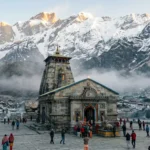

Most Char Dham itineraries treat Haridwar and Rishikesh as pin-code starts — registration counters, taxi stands, a night’s sleep. That undersells them: both cities hold riverfront aartis worth planning around, and both sit at road altitude, making them the natural acclimatisation bookends for the hills.
Checked 01 October 2026 — a desk-research page pending its first-hand pass, so it makes no unverified timing claims.
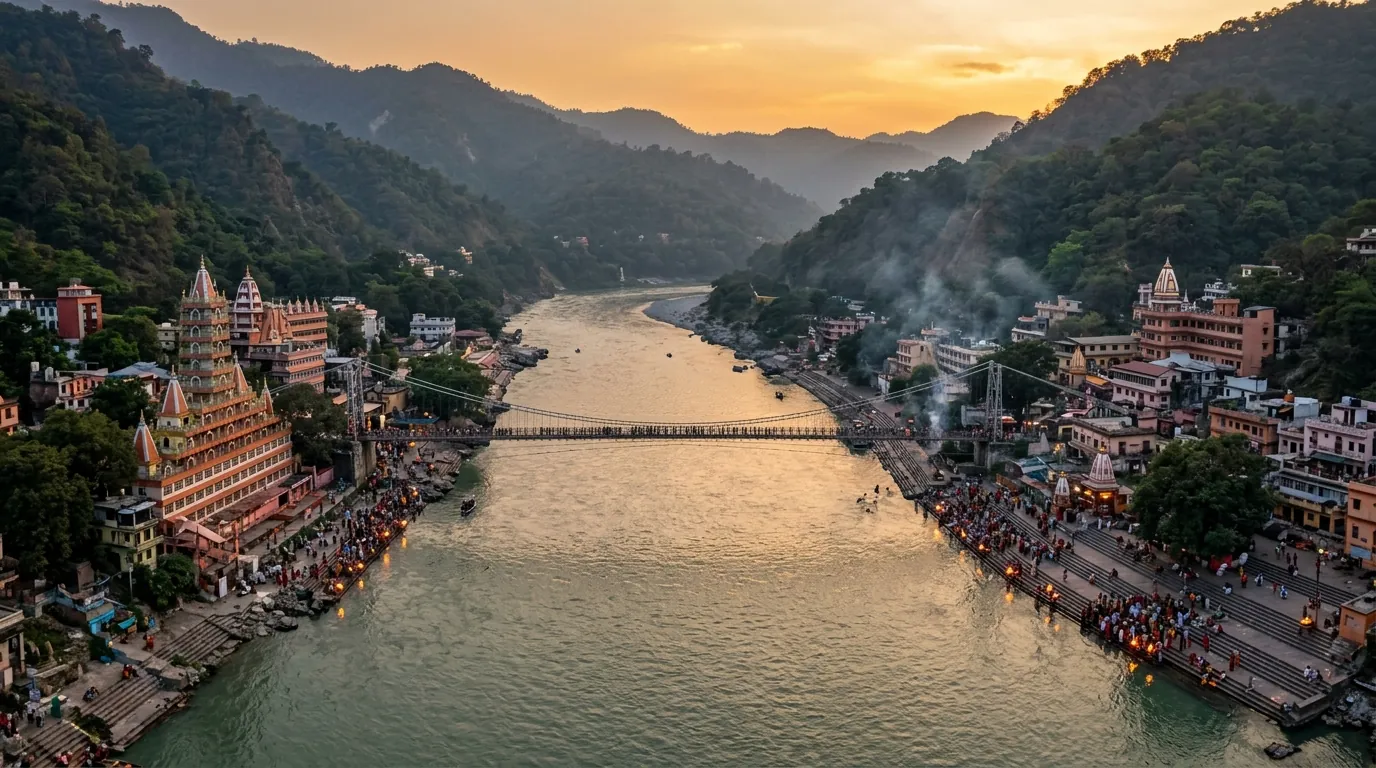
Haridwar — the aarti city
Har Ki Pauri hosts one of India’s most famous Ganga aartis each evening, timed to sunset (reported pattern across our aarti pages). The day-bells, the floating diyas, and the crowd’s timing discipline make it the yatra’s emotional overture. The city is also a Kumbh site — its infrastructure dwarfs most ghat towns.
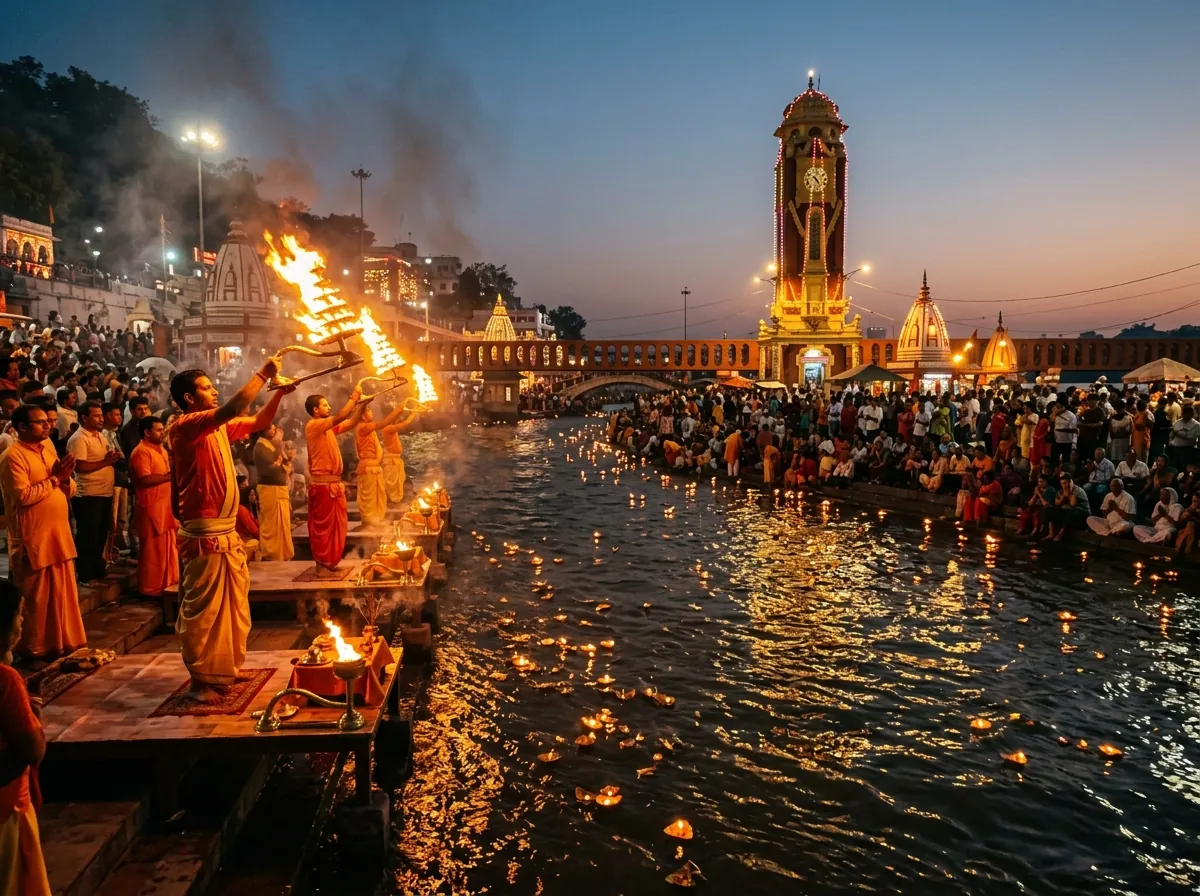
Rishikesh — the bridges and the beats
Ram Jhula and Laxman Jhula suspension bridges, riverside ashrams, Triveni Ghat’s evening aarti, and the yoga-economy that made the town famous. Practical note: the Char Dham road effectively starts here; dawn departures toward the hills are the norm.
The 2-day gateway shape
| Day | Plan |
|---|---|
| Before the hills | Haridwar: Har Ki Pauri morning snan + evening aarti. Registration counter visit. |
| After the hills | Rishikesh: bridges, Triveni Ghat aarti, recovery walk, night train/flight onward. |
Frequently asked questions
Should I add the gateway cities?
Yes — one day each, before and after the hills; they’re already on the route.
What time is the Har Ki Pauri aarti?
It tracks sunset; arrive early. We publish a verified time only after first-hand confirmation — none is officially published.