
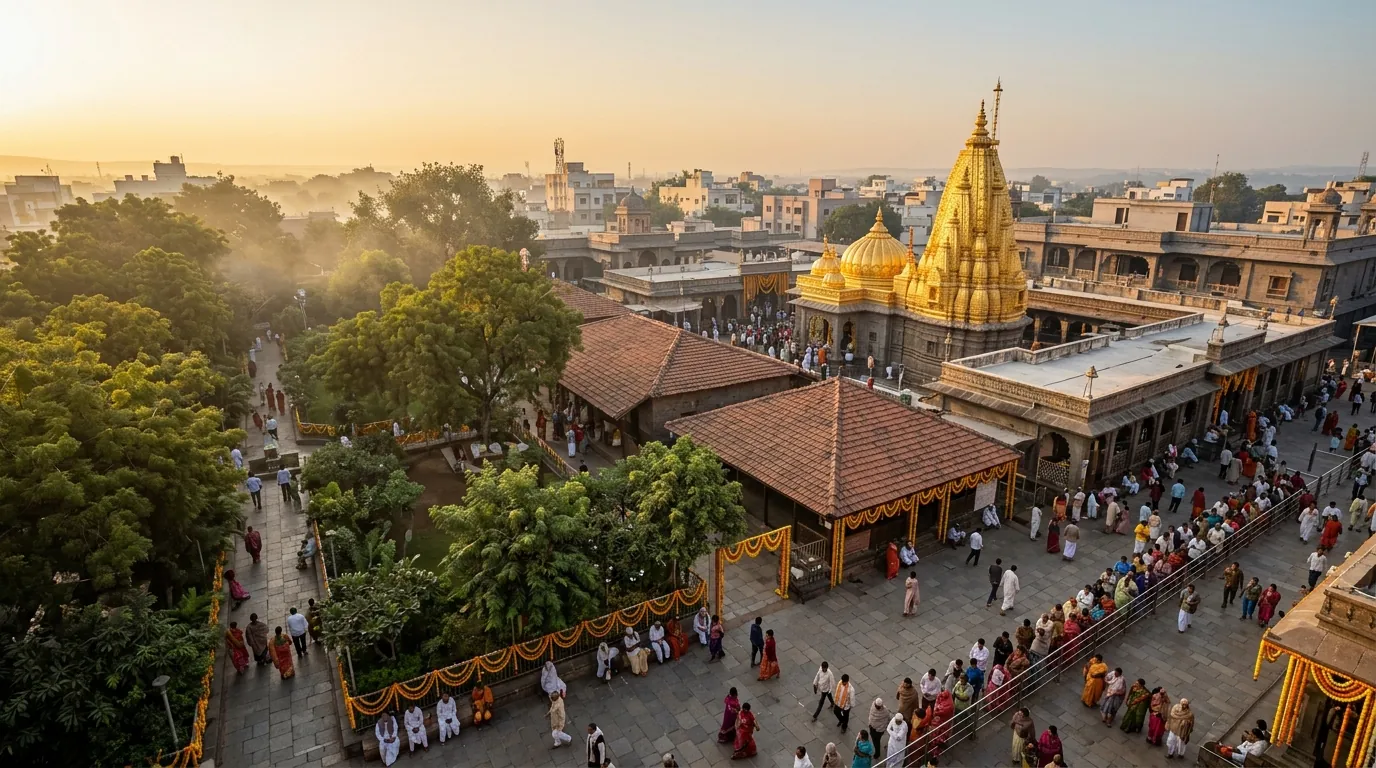
Shirdi is the compact one: one walled complex, one official programme, and a day that can run from the Kakad Aarti at 5:15 AM to the Shej Aarti at 10:00 PM for those staying over. The plan below rides the trust’s own clock. Checked 02 October 2026.
The day
| Time | Plan | Basis |
|---|---|---|
| 4:30 AM | Complex entry; queue for Kakad Aarti | Official programme |
| 5:15 AM | Kakad Aarti | Official |
| 6:25 AM–9:00 AM | Samadhi Mandir darshan | Official |
| 9:30 AM | Dwarkamai and the Dhuni; Gurusthan | Official sites |
| 11:30 AM | Dhuni pooja at Dwarkamai (pause here) | Official |
| 12:00 PM | Mid-day Aarti | Official |
| 12:30 PM | Prasadalaya meal (coupon from darshan) | Official service |
| Afternoon | Lendi Baug, Sai Museum area; rest | Practical |
| Sunset (~6–7 PM) | Dhoop Aarti | Official |
| 10:00 PM | Shej Aarti (overnight pilgrims) | Official |
Adjustments
- Afternoon arrivals: darshan → Dwarkamai → Gurusthan → Dhoop Aarti. Shirdi forgives late starts.
- Thursday: expect the day’s biggest crowds and the reported ~9:15 PM palki — stay the night if the procession matters.
- Festival weeks (Ram Navami, Guru Purnima, Vijayadashami): the complex runs special systems; the New Year week saw 8 lakh pilgrims (reported).
- With elders: the complex is flat and bench-lined; the paid darshan quota (reported ₹200) is the queue lever.
Frequently asked questions
Is one day enough for Shirdi?
Yes — the most single-day-friendly major shrine in India.
What time should I reach?
Before 5:15 AM for the Kakad Aarti; any afternoon time still completes darshan and the main sites.