
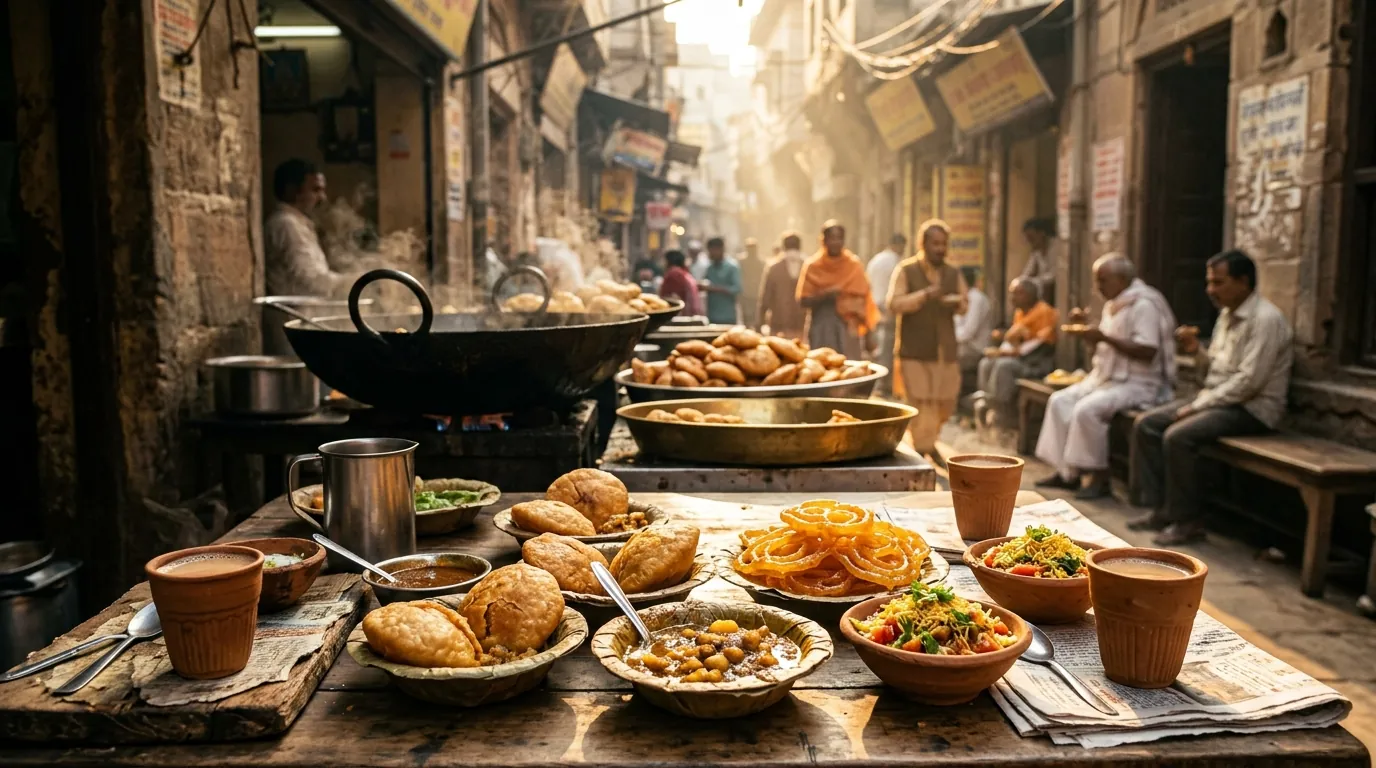
Kashi eats cheap, early and vegetarian-first: kachori-sabzi breakfasts at dawn stalls, tamatar chaat in the afternoon lanes, lassi in clay kulhads whenever the walking stops. The dish traditions are well documented; the famous shop names circulate in blogs more reliably than in news, so each named spot below carries its verification label — and the bands are indicative.
Checked 01 October 2026.
The dishes that define the city
| Dish | What it is | Indicative price | Status |
|---|---|---|---|
| Kachori-sabzi | Fried kachori with spiced potato curry — the breakfast of record | ₹25–50/plate | Unconfirmed (listing level) |
| Tamatar chaat | Varanasi’s signature tomato chaat, served in leaf bowls | ₹30–50 | Unconfirmed |
| Kulhad lassi | Thick lassi in clay cups; dry-fruit variants | ₹40–100 class | Unconfirmed |
| Malaiyo (winter) | Saffron milk foam, cold-season only | ₹50–100 class | Traditional — seasonal availability |
The named spots (labels attached)
- Ram Bhandar (Thatheri Bazar) — the classic kachori-sabzi address in guide writing; blog-tier verification, no news feature found. Worth the queue if the line says so.
- Kashi Chaat Bhandar (near Dashashwamedh) — chaat plates, recurrently named; blog-tier.
- Blue Lassi (lane off Thatheri Bazaar) — the kulhad institution; blog-tier.
A first-hand pass will upgrade or retire these names — that’s the point of the labels.
How to eat the lanes
- Breakfast before the temple queue — kachori-sabzi stalls peak at dawn; the 4 AM darshan crowd eats at 5:30.
- Cash and small notes — leaf bowls and clay cups run on change.
- Water rules — sealed bottles; chaat tolerance is personal, pace yourself.
- Winter bonus: malaiyo appears only in the cold months — a December visit earns it.
Frequently asked questions
What food is Varanasi famous for?
Kachori-sabzi, tamatar chaat, kulhad lassi — plus winter malaiyo.
Is Varanasi food expensive?
No — listing-level bands put plates at ₹25–50 for classics (indicative, unconfirmed). Sit-down meals cost more near the ghats.