For calm darshan, aim for weekday mornings between festivals — October through early December is the comfortable window, and the 7–9 AM slots are the day’s quietest. For festival energy, three dates dominate: Deepotsav (7 Nov 2026), Ram Navami (15 Apr 2027) and New Year’s Day. Crowd patterns are reported; the temple publishes no official wait-time data.
Checked 1 October 2026.
The dates that reshape the city
| Date (2026–27) | Event | What changes | Status |
|---|---|---|---|
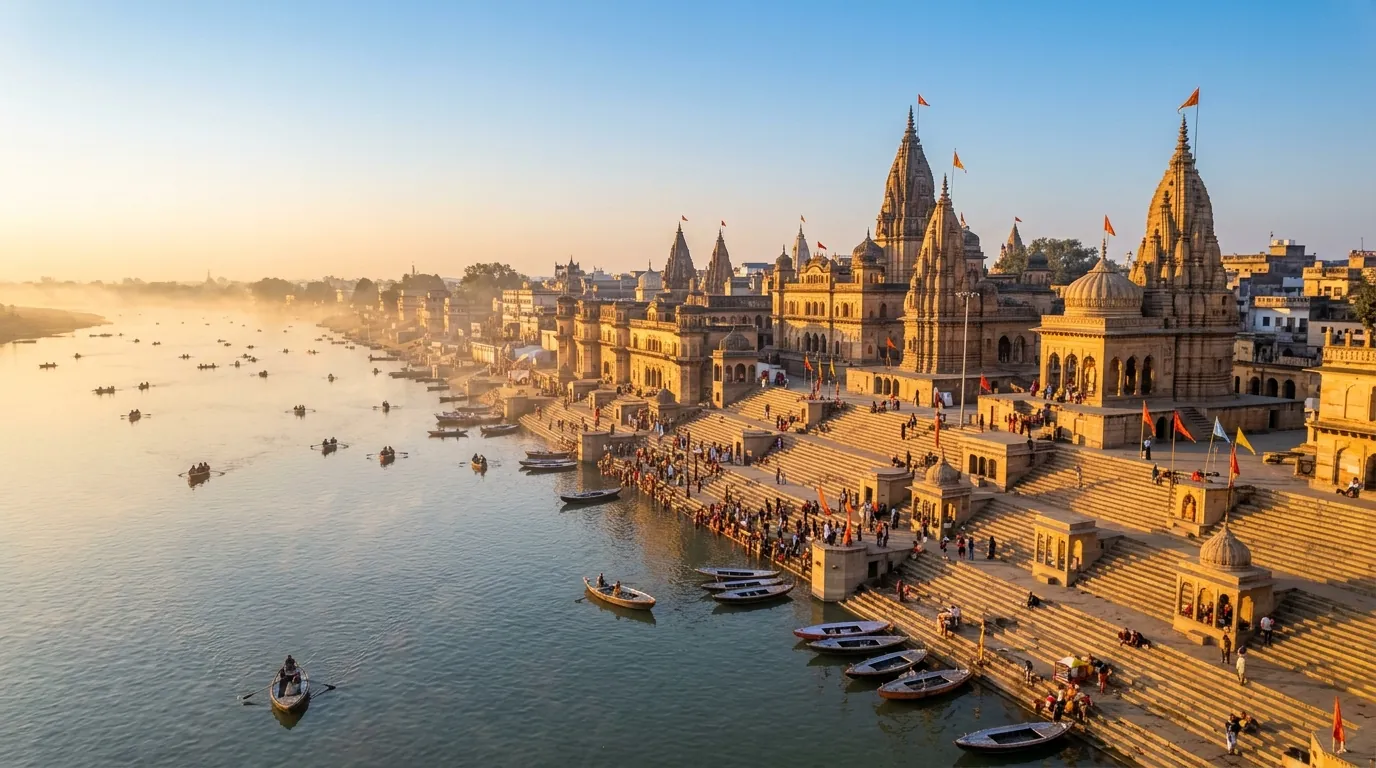
| Sat 31 Oct – Sun 8 Nov 2026 | Deepotsav week (main evening 7 Nov; Diwali 8 Nov) | Drone/laser shows, lakhs of diyas, city-wide road control, hotel sell-outs | Reported (TOI, 24 Sep 2026) + official panchang |
| 1 January (2027) | New Year’s Day | Year’s heaviest single-day darshan rush (2 lakh+ reported on 1 Jan 2025 and 2026) | Reported |
| 14–15 Feb 2027 (approx.) | Mahashivratri-period travel + Magh Mela snans at Prayagraj lift triangle traffic | Busy triangle circuit | Calendar-derived — unconfirmed |
| Thu 15 Apr 2027 | Ram Navami | Peak-day protocols at the temple; city at capacity | Verified — official panchang |
| ~19 Jul – 17 Aug 2027 | Sawan (Shravan) month; Mondays surge | Kanwar-season travel friction in North India | Unconfirmed — verify 2027 dates before publishing |
Month-by-month planning table
| Month | Crowd | Weather (climatological) | Planning note |
|---|---|---|---|
| Oct | Moderate, building | Post-monsoon, warming days | Good all-round window |
| Nov | Peak (Deepotsav week) | Pleasant days, cool nights | Book stays weeks ahead |
| Dec | High on weekends; early Dec lull (reported) | Cool; fog can delay trains | First two weeks reported quietest — unconfirmed |
| Jan | Peak (New Year, Makar Sankranti) | Coldest month | Cold-weather packing |
| Feb | Moderate–high (Ram Navami prep is later; Magh Mela pull) | Warming | |
| Mar | Moderate | Warm | Holi-period travel busy |
| Apr | Peak (Ram Navami, 15 Apr 2027) | Hot, rising | Book everything early |
| May | Moderate crowds, harsh heat | Hottest stretch (42–43 °C highs) | Heat risk for elders; midday avoid |
| Jun | Low–moderate | Extreme heat, pre-monsoon | Early-morning darshan only |
| Jul–Aug | Sawan surge (reported), monsoon rain | Humid, ~1,135 mm rain falls mostly here | Rain plan; Sawan Mondays busy |
| Sep | Moderate | Monsoon tail | Green, fewer tourists |
Weather figures: climatological averages for Ayodhya (climate-data.org), not forecasts.
The daily pattern
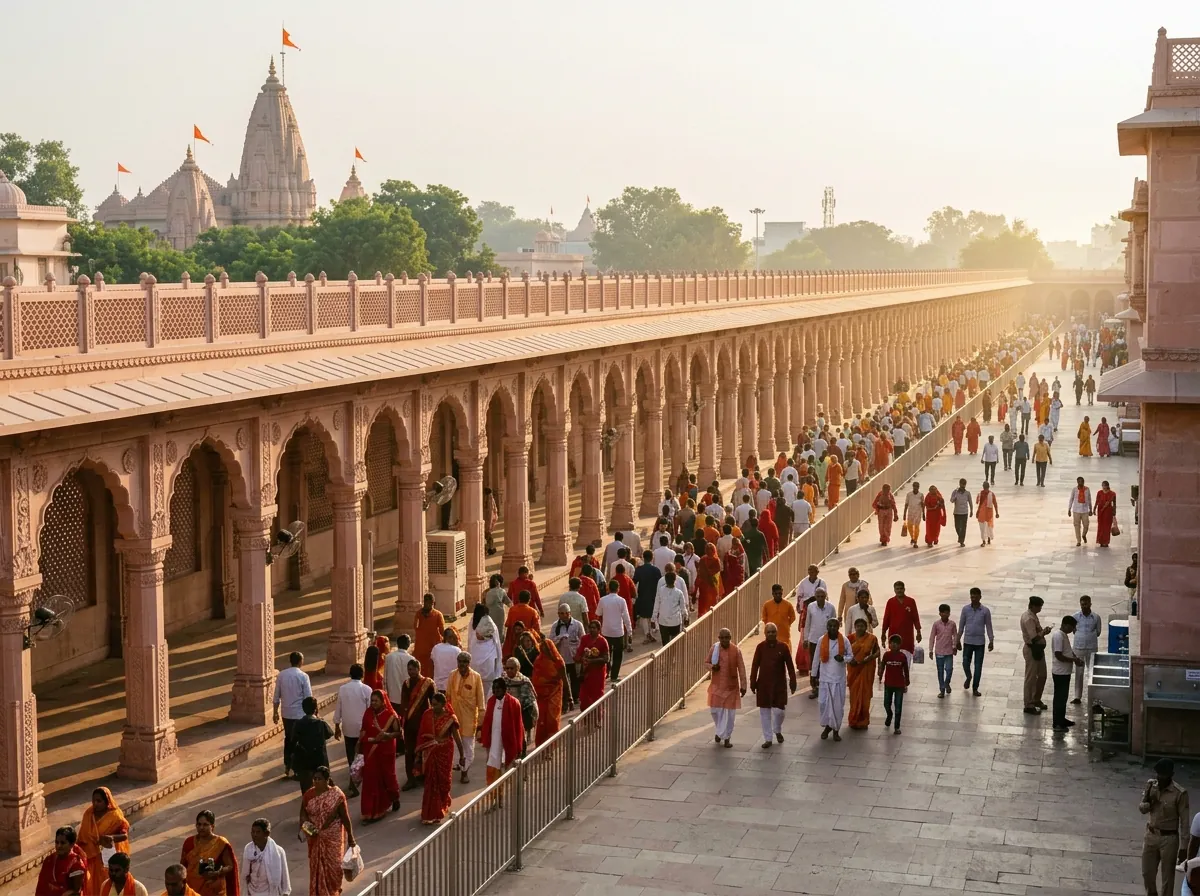
Multiple guide sources converge on the same advice: arrive between 5:00 and 7:00 AM on a weekday, when queues are shortest; late morning through afternoon is the busiest stretch. Reported wait comparisons (30–50 minutes early vs 75–120 minutes later) come from unofficial guides — we could not confirm them against official data, so treat them as directional. The one official-adjacent reference point: in January 2024 the Hindustan Times described a roughly 50-minute moving queue after the crowd-management overhaul.
Footfall context, honestly stated
UP Tourism figures put 16.44 crore tourist visits in Ayodhya district in 2024, up from 5.75 crore in 2023 — district-wide counts, not temple-gate counts, and different reports use different methodology. The useful takeaway is the trend line: demand has multiplied, and stays near the temple sell out around every anchor date.
Frequently asked questions
What is the best month to visit Ayodhya for less crowd?
October and the festival-free winter weeks, with weekday early-morning darshan. No official crowd data exists — this is a reported pattern.
When is Deepotsav 2026?
The main evening is reported for 7 November 2026; Diwali is 8 November 2026 (Drik Panchang; Times of India, 24 Sep 2026).
When is Ram Navami 2027?
15 April 2027, per Drik Panchang’s Ayodhya listing (checked 1 October 2026).
Is Ayodhya too hot in summer?
May–June highs reach 42–43 °C (climatological average). Elderly travellers should target early-morning darshan and indoor hours midday — see the senior guide.