
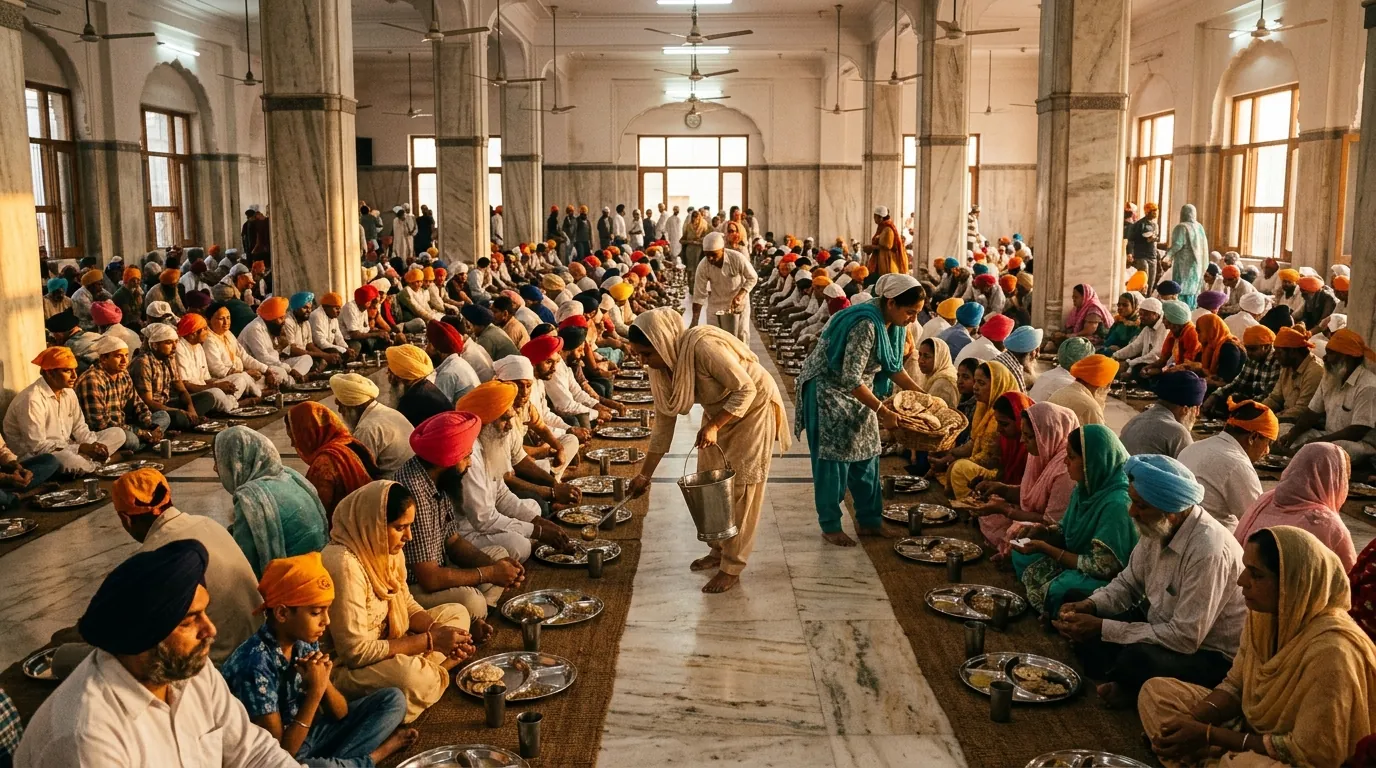
The langar at Harmandir Sahib is the largest act of daily hospitality on earth: 50,000–100,000 free meals a day, served cross-legged on hall floors, 24×7, cooked and carried mostly by volunteers (reported). For a pilgrim, it’s two experiences in one — eating in the queue, and serving in the kitchen. Checked 02 October 2026.
The facts
| Item | Detail | Status |
|---|---|---|
| Meals/day | 50,000–100,000 | Reported |
| Hours | 24×7 | Reported |
| Cost | Free; donations voluntary | Reported |
| Volunteering | Walk-in seva — cooking, rolling, washing, serving | Reported |
Eating the langar
Join the queue with your footwear stored and head covered; take a plate, sit in the rows, and eat what’s served — dal, roti, kheer-class sweetness on festival days. The etiquette is simple: accept, finish, and carry your plate to the washing line. That last gesture — handing your own plate forward — is the whole philosophy in one motion.
Doing seva
Walk in and ask. The kitchen runs on hands appearing at any hour: chapati lines, vegetable mountains, the dish-washing halls. No booking, no certificate — the work is the point. An hour of seva is the most-recommended experience in Amritsar by a wide margin, and the one we’d put first in any itinerary.
Frequently asked questions
Can non-Sikhs eat or volunteer?
Yes — langar and seva are open to everyone; that’s the institution’s point.
What does it cost?
Nothing. Ever. Donations are optional.